If you’re building an AI roleplay bot with image generation, one of the earliest decisions you’ll face is art style. Do you go anime? Realistic? Both?
This isn’t just an aesthetic choice. It affects your training pipeline, compute costs, generation quality, and ultimately how users connect with your characters. We’ve tested both extensively with Suzune, and the answer depends on more than “just pick what looks cool.”
Here’s what we’ve learned.
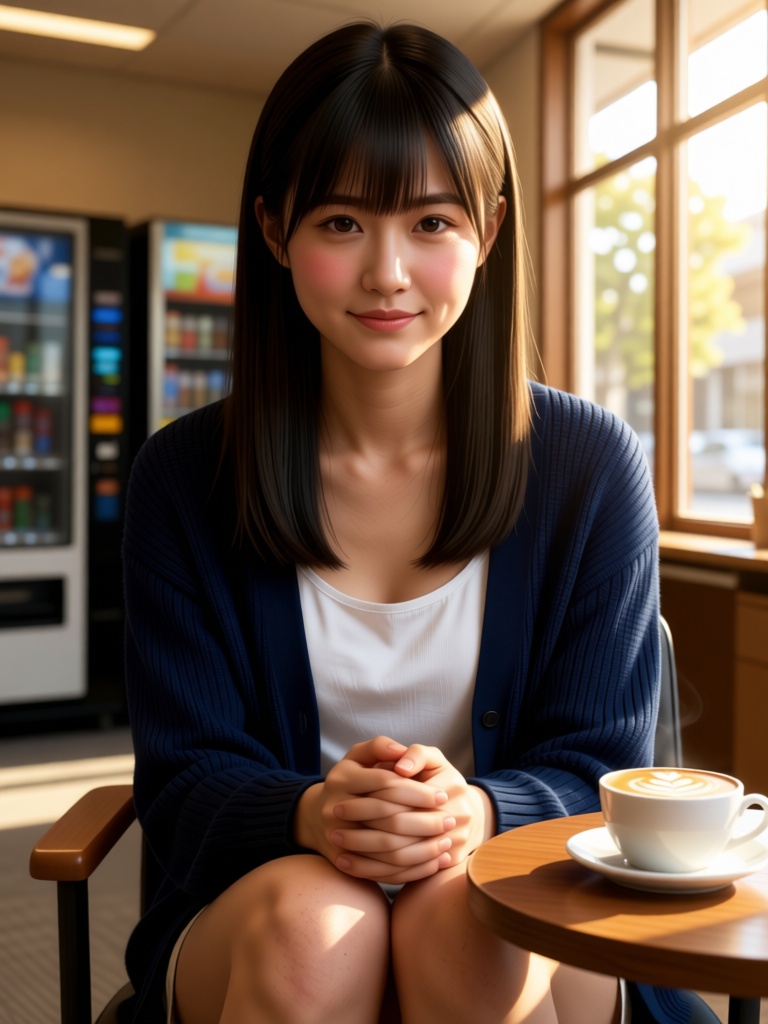
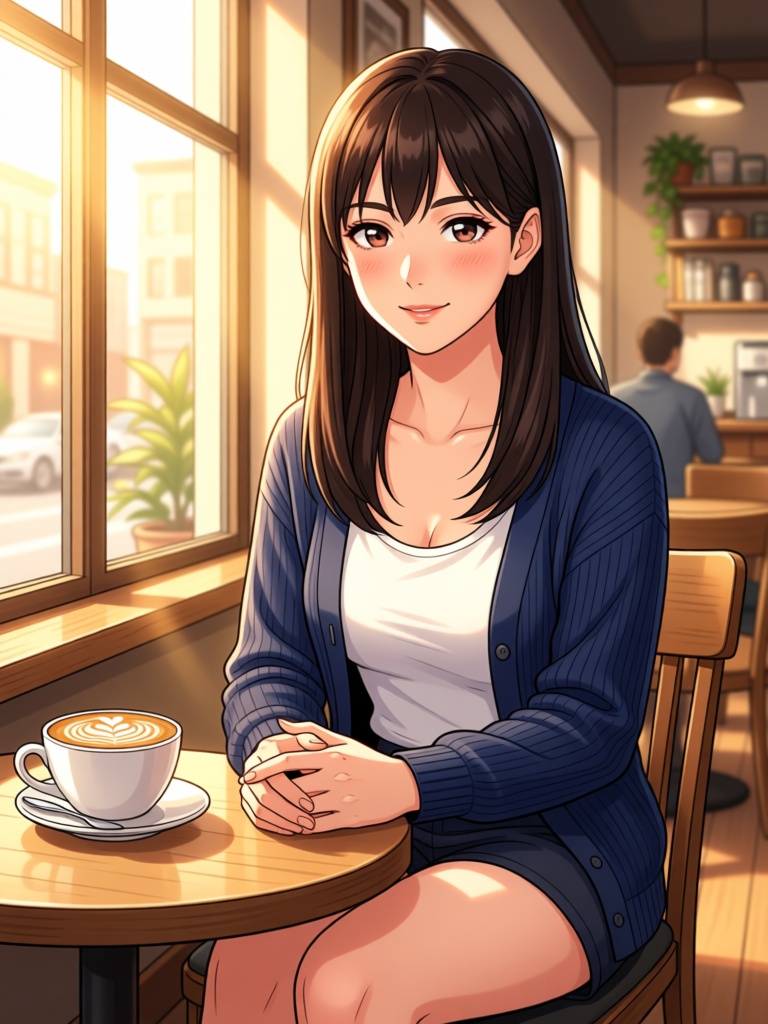
Same character, same café scene. Left: realistic (3D) pipeline. Right: anime (2D) pipeline. Generated from the same base image using Suzune’s style-switching system.
Table of contents
Open Table of contents
What Users Actually Want
Let’s start with where your users actually are.
Anime dominates the roleplay community. Platforms like JanitorAI and CharacterAI — the two biggest hubs for character-based RP — are overwhelmingly anime-styled. Browse JanitorAI’s trending characters on any given day and you’ll see 80%+ anime avatars. The culture is rooted in visual novel and gacha game aesthetics. Users expect it.
On the other hand, the AI girlfriend platforms have carved out strong territory with realistic (or semi-realistic) imagery. Candy AI offers both anime and realistic characters, but their marketing leans heavily into photorealistic AI-generated portraits. FantasyGF follows a similar model — realistic as the flagship, anime as an option.
Here’s the rough breakdown by platform type:
| Platform Type | Primary Style | Secondary Style |
|---|---|---|
| JanitorAI / CharacterAI | Anime | Semi-realistic |
| Candy AI / FantasyGF | Realistic | Anime |
| Telegram bots | Flexible (operator’s choice) | — |
| Discord bots | Anime-leaning | Depends on server |
The takeaway: your art style should match where your users live. If you’re targeting the RP community that hangs out on character platforms, anime is the safe default. If you’re building an AI companion product, realistic opens up a different (and often higher-paying) audience. For a deeper look at how these platforms compare, check our platform breakdown for 2026.
Technical Differences: Training and Infrastructure
This is where things get interesting for developers.
Anime LoRA Training
Training a LoRA model for an anime character is surprisingly forgiving:
- Dataset size: 15-30 images is usually enough for a solid anime LoRA. The stylistic consistency of anime means the model picks up defining features faster.
- Style consistency: Anime has built-in “abstraction.” Hair color, eye shape, and outfit silhouette carry most of the identity. This means your LoRA doesn’t need to learn subtle skin texture or lighting nuance.
- Training time: A decent anime LoRA on a single GPU takes 20-40 minutes. On RunPod, that’s pennies.
- Base model options: Models like Anything V5, CounterfeitXL, and AnimagineXL are purpose-built for anime. You’re working with the grain, not against it.
Realistic LoRA Training
Realistic is a different beast:
- Dataset size: You need 30-80+ high-quality images for a convincing realistic LoRA. And “high-quality” means consistent lighting, resolution, and angle variety.
- Uncanny valley risk: This is the killer. A slightly-off anime face reads as “stylistic.” A slightly-off realistic face reads as “horrifying.” The margin for error is razor thin.
- Training time: Longer, because the model needs to learn more subtle features. Expect 40-90 minutes per LoRA, and more experimentation to get it right.
- Base model options: SDXL-based realistic models (RealVisXL, JuggernautXL) are good but demand more careful prompting and higher-quality training data.
Cost comparison for a single character LoRA:
| Factor | Anime | Realistic |
|---|---|---|
| Training images needed | 15-30 | 30-80+ |
| Training time (SDXL) | ~30 min | ~60 min |
| GPU cost (RunPod) | ~$0.30-0.50 | ~$0.60-1.20 |
| Attempts to get it right | 1-3 | 3-8 |
| Total realistic cost | ~$1-2 | ~$5-15 |
That gap compounds fast when you’re maintaining a roster of characters. If you’re running your bot on a tight budget, anime LoRAs are significantly easier on the wallet.
Generation Quality: Where Artifacts Hide
Every AI image generation pipeline produces artifacts — weird hands, inconsistent backgrounds, clothing that merges with skin. The question is how much those artifacts matter.
Anime: Artifacts Are Features
Okay, not exactly features. But anime’s stylistic abstraction is incredibly forgiving:
- Hands: Still a problem, but anime hands are already simplified. A slightly weird finger reads as a stylistic choice rather than a Lovecraftian horror.
- Backgrounds: Simple gradient or pattern backgrounds are the norm in anime. You don’t need photorealistic environments.
- Consistency: Generate 10 anime images of the same character and they’ll feel cohesive even with some variation. The style itself provides consistency.
- Generation settings: 20-30 steps, CFG 5-7. Fast, cheap, good enough.
Realistic: Every Pixel Is Judged
Realistic generation has higher quality requirements across the board:
- Hands: Still the weakest point, and there’s no stylistic cover. Bad realistic hands break immersion immediately.
- Skin texture: Too smooth = plastic mannequin. Too detailed = uncanny pore nightmare. The sweet spot is narrow.
- Eyes: Anime eyes can be huge and sparkly. Realistic eyes need to look… real. Asymmetry, pupil dilation, correct reflections — users notice when these are off.
- Generation settings: 30-50 steps, CFG 4-6 (paradoxically lower CFG often works better for realism), often with a refiner pass. Slower, more expensive per image.
The practical result: anime pipelines produce usable images at a much higher rate. We see roughly 85-90% usable output from our anime generation pipeline versus 60-70% for realistic. That 20% gap means more retries, more compute, and more latency for your users.
Emotional Expression: The RP Factor
This is where anime pulls decisively ahead for roleplay specifically.
Roleplay is dramatic. Characters blush, rage, cry, smirk, and go through intense emotional arcs. The visual system needs to match that energy.
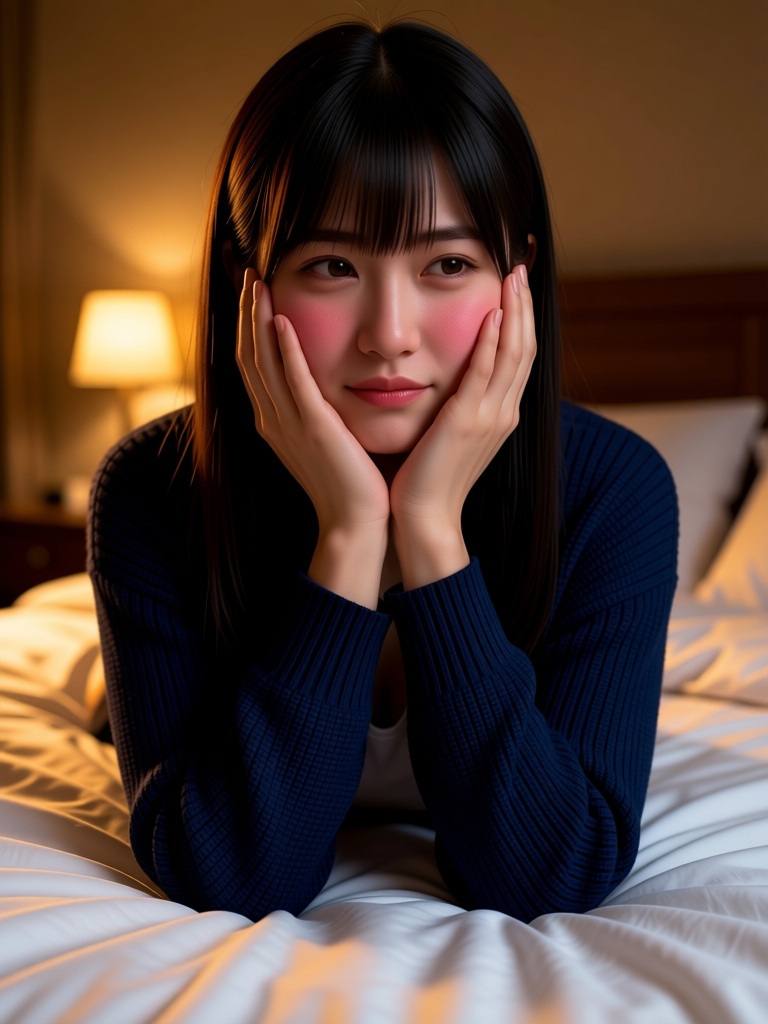
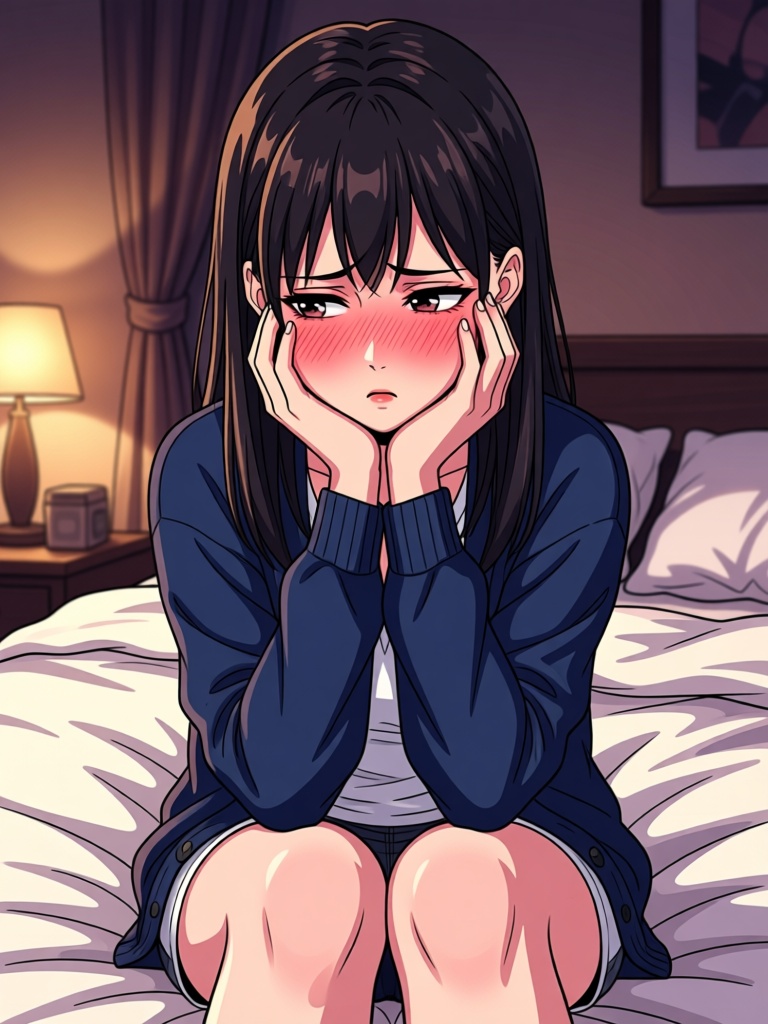
The same “embarrassed blush” expression in realistic vs anime. The anime version communicates the emotion instantly through exaggerated color and expression conventions. The realistic version is subtler — great for some use cases, but less effective for dramatic RP moments.
Anime excels at exaggerated emotion. Blushing cheeks with visible pink tint. Sparkly eyes for happiness. Sharp angles and shadows for anger. Tears that catch light. These are conventions that anime viewers already read fluently. When your character’s affection system triggers a blush, an anime image sells it instantly.
Realistic struggles with emotional range. Subtle expressions — a slight smile, a pensive look — work beautifully in realistic style. But the big, dramatic emotions that RP demands? A photorealistic character with exaggerated anime-level blushing looks absurd. You’re stuck in a narrower emotional bandwidth.
For RP bots specifically, anime’s ability to externalize internal emotional states through visual conventions is a massive advantage. It’s not just prettier — it communicates more information per image.
Our Approach with Suzune
We thought about this a lot when building Suzune’s image system. Here’s where we landed:
2D anime is our default brand and primary pipeline. Most of Suzune’s characters are designed anime-first. Our LoRA training pipeline is optimized for anime models, our base image switching system was built with anime conventions in mind, and our prompt templates target anime checkpoints.
Realistic is available as a per-character option. Some character concepts work better in realistic — particularly those designed for the AI girlfriend audience rather than the RP community. For these characters, we maintain separate LoRA models trained on realistic base models, with their own prompt templates and generation settings.
The key architectural decision: style is a character-level config, not a system-level setting. Each character definition includes their art style, which determines:
- Which Stable Diffusion checkpoint to use
- Which LoRA to load
- Prompt template (anime vs realistic prompting is very different)
- Generation parameters (steps, CFG, sampler)
- Post-processing pipeline
This means we can mix anime and realistic characters in the same bot without any system-level changes. A user can chat with an anime character, then switch to a realistic one, and the image pipeline adapts automatically.
# Character style config example
characters:
  sakura:
    style: anime
    checkpoint: animagine-xl-v3
    lora: sakura_v2
    steps: 25
    cfg: 6
  victoria:
    style: realistic
    checkpoint: realvis-xl-v4
    lora: victoria_v1
    steps: 40
    cfg: 4.5
The Recommendation: Start Anime, Add Realistic Later
If you’re building an RP bot and wondering where to begin, here’s our honest advice:
Start with anime. Here’s why:
- Lower barrier to entry. Fewer training images, faster iteration, cheaper compute. You’ll get a working image pipeline faster.
- More forgiving quality. Your early generations won’t be perfect. Anime hides imperfections that realistic amplifies.
- Wider RP audience. The core RP community skews heavily anime. You’re building for the bigger market first.
- Better emotional expression. RP lives and dies on emotional resonance. Anime delivers that more effectively.
- Cheaper to run. Fewer steps, fewer retries, less compute per image. On RunPod or similar GPU providers, this adds up fast.
Then add realistic when:
- You’ve nailed your anime pipeline and want to expand your character roster
- You’re targeting AI girlfriend platforms like Candy AI or FantasyGF where realistic imagery converts better
- You have specific character concepts that demand realistic style
- Your infrastructure can handle the higher per-image cost
The beauty of building style as a character-level config (like we did with Suzune) is that adding realistic later is an extension, not a rewrite. Your anime pipeline keeps running. Realistic is just another style option in your character definitions.
Final Thoughts
The anime vs realistic debate isn’t really about which looks “better.” It’s about which serves your use case, your audience, and your budget.
For roleplay bots — where emotional expression, character consistency, and cost efficiency matter most — anime wins as a starting point. It’s not a compromise. It’s a strategic choice backed by practical engineering tradeoffs.
Realistic has its place, especially as you scale toward AI companion products. But if you’re reading this blog, you’re probably building something closer to what we’re building with Suzune. And for that, 2D is home.
Building your own image pipeline? Start with our guide on auto-generating character portraits with LoRA, then check out dynamic character visuals for making your characters feel alive across different scenes and moods.